Journal
Cost of Living in Pittsburgh: What Renters Actually Pay Beyond Rent
Pittsburgh is one of the more affordable big cities in the country, and your rent goes further here than in most metros. Still, rent isn't the only line in your budget. You'll also want to plan for electricity, heat, possibly water and sewer, internet, renters insurance and getting around.
What Renters Actually Pay Beyond Rent?
Rent isn't the only line in your budget. You'll also want to plan for electricity, heat, possibly water and sewer, internet, renters insurance, and getting around. There are also two local taxes: a 3% earned income tax if you live in the city, and a $52-a-year Local Services Tax if you work there. Here's what each one looks like.
Key takeaways
- Pittsburgh is affordable, with overall prices near 95% of the national average and rents around 72%
- Budget about $152 a month for electricity and $115 for water, though apartments usually cost less.
- City residents pay a 3% earned income tax, and anyone working in the city pays a $52 yearly Local Services Tax.
- Get around cheaply with $2.75 transit rides or a $97.50 monthly pass, and a $40 parking permit if needed.
- Before signing, ask which utilities are included, how the unit is heated and what extra fees apply.
Good news first: Pittsburgh is one of the more affordable big cities in the country, and your rent goes further here than in most metros. Still, rent isn't the only line in your budget. You'll also want to plan for electricity, heat, possibly water and sewer, internet, renters insurance and getting around. There are also two local taxes: a 3% earned income tax if you live in the city, and a $52-a-year Local Services Tax if you work there. Here's what each one looks like.
Is Pittsburgh expensive to live in?
No, and that's one of the city's biggest draws. Federal data puts overall prices in the Pittsburgh area at about 94.7% of the national average, with rents around 72% of the national level (BEA via FRED). In plain terms, your paycheck stretches further here than in most major cities.
What you'll budget for beyond rent
Expense | Typical cost | Good to know |
Electricity (Duquesne Light) | About $152/month for an average home | Apartments usually use less |
Water and sewer | About $115/month for a typical home | Often included or shared in apartment buildings |
Renters insurance | About $127/year | Check your lease |
Transit (PRT 31-Day Pass) | $97.50/month | $2.75 for a 3-hour ride |
Residential parking permit | $40/year per vehicle | Only needed in permit areas |
Local earned income tax | 3% of wages | For city residents |
Local Services Tax | $52/year | About $1 a week |
What's the average utility bill for a Pittsburgh apartment?
It depends on what your building includes, so that's always the first thing to ask. Here's what each utility looks like.
Electricity. Duquesne Light delivers power across Pittsburgh. EIA data shows an average Duquesne Light home used about 597 kWh and paid about $152 a month over the year ending August 2026. Apartments typically use less than a full house, so many renters come in under that. You can also choose your own electricity supplier on PAPowerSwitch, the state's official comparison site.
Heat. Ask whether your unit heats with gas or electricity. If it's gas, Peoples Natural Gas offers budget billing, which spreads winter costs evenly across the year so there are no surprises.
Water and sewer. If water isn't included in your rent, a typical Pittsburgh home's bill is about $115 a month (Pittsburgh Water). Apartments generally use less water than houses, and some buildings include it in rent, so ask how yours handles it.
Internet. Prices vary by provider and speed, so get a quote for your exact address before you move.
Local taxes to know about
Local earned income tax. If you live in the City of Pittsburgh, 3% of your wages goes toward local earned income tax: 1% to the city and 2% to the school district (City of Pittsburgh). Your employer usually withholds it automatically. On a $60,000 salary, that's $1,800 a year.
Local Services Tax (LST). This is a flat $52 a year for people who work in the city and earn $12,000 or more. It usually comes out of your paycheck at about $1 a week. You only pay it once a year, even if you have two jobs, and you can request a refund if you earned under $12,000.
Sales tax. Allegheny County's rate is 7%, and Pennsylvania doesn't tax most groceries or clothing, which helps with everyday shopping.
Getting around: transit and parking
Pittsburgh is easy to get around without spending much. A Pittsburgh Regional Transit ride costs $2.75 and gives you three hours of transfers. A 31-Day Pass is $97.50 for unlimited rides according to PRT details.
If you bring a car, some neighborhoods use residential parking permits. They cost $40 a year per vehicle, and visitor passes are $10.
Questions to ask before you sign
A few quick questions make budgeting easy:
Which utilities are included in rent?
How is the unit heated?
Are there parking, pet or amenity fees?
Knowing these up front means your first month holds no surprises.
Where location saves you money
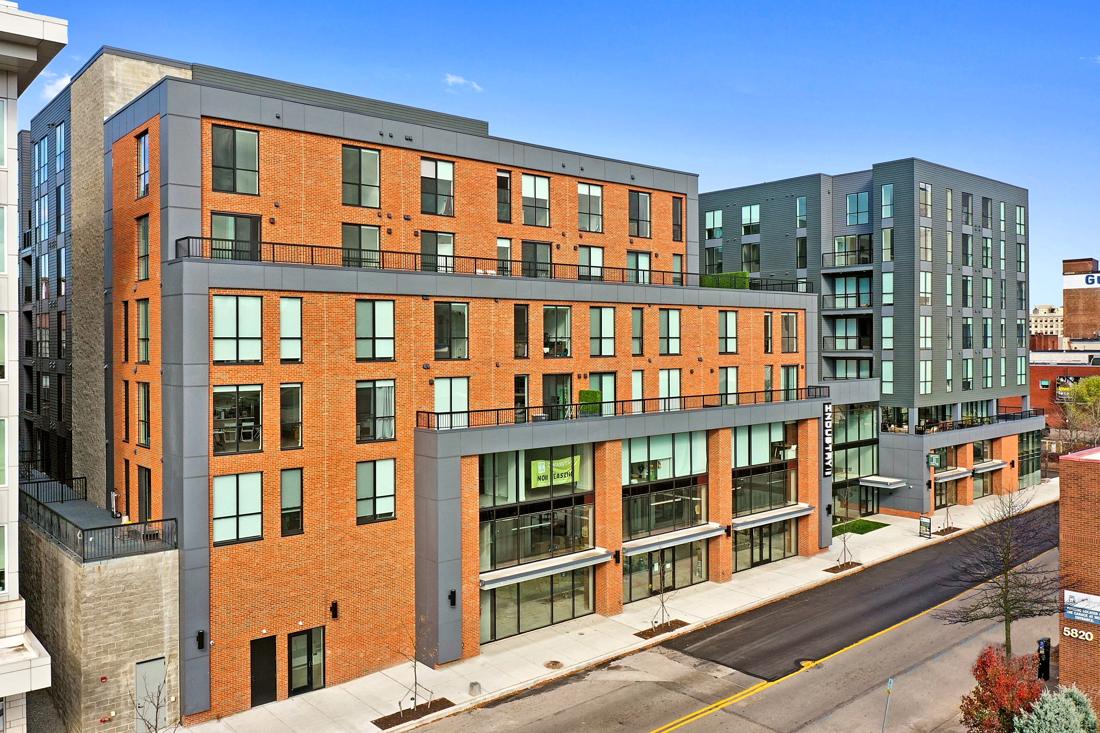
Full disclosure: we're Industry Pittsburgh, at 5819 Centre Ave, where Shadyside, East Liberty and Bloomfield meet. One of the easiest ways to lower your monthly costs is to live close to where you work and play. From here, UPMC, Pitt and Carnegie Mellon are a short walk or bike ride away, and the East End's restaurants and shops are right outside the door. That can mean an affordable commute, or no car payment at all.
Take a look at our floor plans, from studios to penthouse lofts, or visit our FAQ for answers to common leasing questions.
Frequently asked questions
What is the average utility bill for a Pittsburgh apartment?
An average Duquesne Light home pays about $152 a month for electricity, and apartments usually use less. If you pay water and sewer separately, a typical home's bill is around $115. Ask what your rent includes so you can budget accurately.
What is the Pittsburgh Local Services Tax?
It's a flat $52-a-year tax for people who work in the City of Pittsburgh and earn at least $12,000 a year. Employers usually take out about $1 a week, and you only pay it once a year.
Do I pay the Local Services Tax if I live outside Pittsburgh?
Yes, if you work inside city limits. The tax is based on where you work, not where you live.
How much is Pittsburgh's local earned income tax?
City residents pay 3% of earned income: 1% to the city and 2% to the Pittsburgh school district. Employers usually withhold it automatically
How can I lower my electric bill in Pittsburgh?
Start by comparing supplier offers on PAPowerSwitch. Duquesne Light still delivers your power and sends your bill no matter which supplier you choose. Living in an apartment helps too, since apartments typically use less energy than houses.
How much is a residential parking permit in Pittsburgh?
It's $40 a year per vehicle, and a visitor pass is $10. You only need one if you park on the street in a permit area.
Is renters insurance required in Pennsylvania?
No state law requires it, but your lease might. It's affordable either way: Pittsburgh renters pay about $127 a year on average, according to NerdWallet.